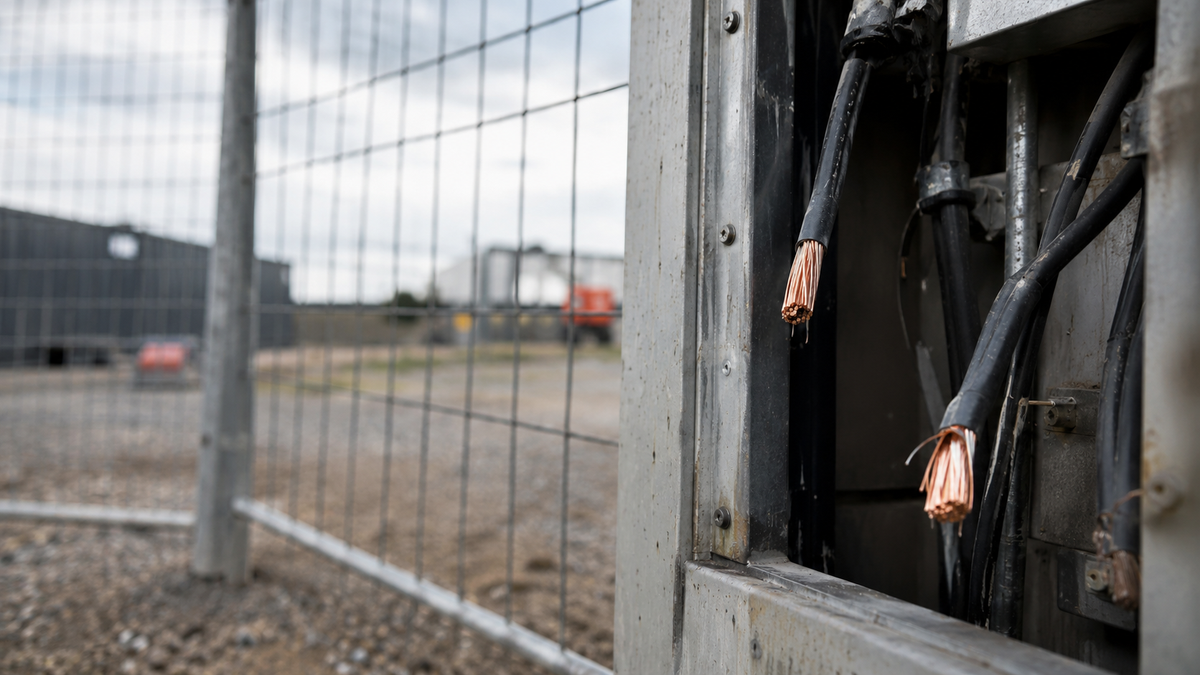
Copper cable theft is hitting New Zealand construction sites, solar farms, electricity line networks, and rural properties hard in 2026. On remote sites, thieves can work for hours before anyone notices. The most effective copper cable security prevention combines secure cable storage, controlled site access, visible deterrents, and monitored CCTV that detects intruders and triggers a response while they are still on site.
Recent incidents show what is at stake. On 5 October 2026, Police charged three men over an attempted copper theft at a development site in Waikanae.
Crosbies Security provides relocatable, solar-powered CCTV towers for New Zealand remote and rural construction, energy, and infrastructure sites, supported by AI-assisted detection and 24/7 professional monitoring. This guide covers where the risk sits, practical prevention steps, how monitored security works, and how to weigh up the cost.
Why Copper Wire Theft is Rising in New Zealand
Copper is relatively easy to cut, carry, and sell as scrap. Scrap metal theft, including copper, almost tripled over three years according to a 2025 police report cited by RNZ. But the scrap value is a tiny fraction of the repair bill.
Recent New Zealand examples:
- Rail: In July 2026, a single cut signalling cable at Takapu Road Station in Tawa caused about $3,000 of damage and suspended train services while emergency repairs were carried out.
- Lines networks: Orion recorded 173 copper wire theft incidents across its network over six months, costing more than $512,000 in repairs, as reported in March 2026. That figure excludes the wider impact of outages on local businesses.
- Farms: Canterbury Police reported 12 thefts of copper cabling from irrigators across North Canterbury, with losses reported to exceed $130,000. These losses exclude labour, contractor call-outs, and lost irrigation time.
- Commercial property: In July 2026, Police recovered about $200,000 worth of copper cable after a break-in at a property in Lincoln. This was the value of cable recovered, not necessarily the owner's total loss.
Theft also leaves exposed live conductors and missing earthing, putting workers and the public at risk.
Which Sites Are Most at Risk of Copper Cable Theft?
Remote, unlit, or unattended sites with high-value cable carry the greatest risk. Rural sites are hit hardest, with no mains power, no neighbours and a long wait for help. Explore all the industries we support.
Solar Farms
Solar farms present unique security challenges because of their large footprints, remote locations, and evolving construction activities. Theft and vandalism can cause significant financial losses, project delays, and commissioning disruptions.
Security requirements change throughout construction and into operation, making flexible surveillance essential.
Building and Civil Sites
The October 2026 Waikanae arrests happened at a development site. Construction sites hold cable on drums, in temporary power boards and freshly pulled through conduits, and the layout changes week to week. Theft on a live build also creates a health and safety issue, as damaged temporary power or missing earths can put workers at risk the next morning. Learn more about our Gen-2 or Gen-3 Solar CCTV towers.
Power and Lines Companies
In early 2026, Orion described a Selwyn spike as the largest increase in such a short period it had seen, with most thefts targeting earthing conductors on power poles. Those wires are part of the network safety system, so their removal increases the risk of electric shock. Substations, depots, switching stations, and network upgrade projects in rural areas are all exposed.
Farmers and Rural Landowners
The North Canterbury irrigator thefts show how long theft can go unnoticed. Pivots sit idle over winter, so damage was only found when farmers recommissioned for the season. Pump sheds, effluent systems, and remote buildings carry similar risks.
Seven Ways to Prevent Copper Cable Theft on NZ Sites
1. Protect Cable Before It Is Installed
Security starts the day cable drums arrive. Coordinate high-value deliveries with the installation programme, so material isn't left unattended for weeks, and keep drums together in one secure, monitored laydown area rather than spread across the site.
2. Limit How Long Cable Is Exposed
Pulled-but-unterminated runs and open trenches are easy targets. Terminate, backfill, or cover cable as soon as practical, and plan around weekends and holiday shutdowns.
3. Control Access
Secure fencing, locked gates, and a clear sign-in process make it harder to reach the copper. Removing large quantities of cable usually requires a vehicle, so restricting vehicle access is particularly useful. Don’t assume everyone in hi-vis belongs there.
4. Make the Site Visible
Lighting and clear signage show the site is actively managed and watched. They will not stop a determined offender on their own, but they reduce the appeal of an easy target.
5. Put Cameras Where the Copper Is
Prioritise laydown areas, entrances, exposed cable runs, and active work zones, allowing for detection range, obstructions, and lighting. Review placement whenever laydown areas, trenches or access routes move.
6. Make Sure Someone Responds
Recorded footage supports an investigation, but it doesn't stop a theft in progress. Agree in advance who acts on an after-hours alert, how quickly, and what they do.
7. Inspect Idle Assets Regularly
Check equipment that sits unused, such as irrigators, pump sheds, depots and pole earthing, on a routine schedule so theft is found early.
If you see suspicious activity, call 111 if it is happening now or 105 afterwards. For damaged power lines, contact your local lines company. On a Crosbies-monitored site, you don’t have to be the one watching. Our operators verify what’s happening, call the police while the intruder is still on site, and alert your site contact so damage can be reported straight away.
How Monitored CCTV Is the Strongest Copper Cable Security
Different types of CCTV offer very different levels of protection. The key question is whether anything happens while an intruder is still on site.
| Security approach | What it does | Main limitation |
|---|---|---|
| Recording-only CCTV | Captures footage for investigation | No intervention while the theft is happening |
| Motion-alert CCTV | Notifies a nominated person of activity | Relies on someone seeing the alert and responding, often overnight |
| AI-assisted CCTV | Separates people and vehicles from wind, wildlife, and shadows | Detection alone doesn’t mean anyone acts |
| Professionally monitored CCTV | Operators assess events and escalate | Depends on monitoring procedures and site coverage |
| Monitored CCTV with active deterrents | Adds on-site lights and warnings to detection and response | Needs the right placement, configuration, and reliable power and connectivity |
Each step down the table adds another opportunity to interrupt an incident rather than simply record it.
How Crosbies Security Stops Thieves on Remote Sites
Our towers combine cameras with advanced multi-layered AI and 24/7 monitoring by an A1-graded monitoring team. Each alert moves through four stages:
- Detect: Dual-layer AI analytics flag potentially suspicious activity, such as a person or vehicle in a monitored zone, while filtering out much of the movement caused by wind, wildlife and shadows.
- Verify: A monitoring operator reviews the relevant footage to assess what is happening.
- Deter: Where appropriate, configured deterrents such as spotlights and a 110dB spoken warning let intruders know they have been seen. Depending on site set-up, these may activate automatically on detection or be triggered by the operator.
- Respond: Operators follow the escalation procedure you agreed to. That may include contacting Police with verified information, arranging a security patrol or response, or notifying your site contact. Police decide their response based on the circumstances and available resources.
Monitoring Schedules
Each site has an agreed monitoring schedule. Cameras arm automatically outside working hours and disarm when your crews are expected on site, so normal daytime activity does not generate alerts.
Movement after hours, at weekends or during shutdowns is treated as potentially suspicious and assessed by an operator. Planned out-of-hours work, such as night works or a weekend pour, can be added to the schedule in advance or the system can be disarmed through the user's app.
Built for Remote and Changing Sites
- Solar-powered with battery backup, so no mains connection or trenching is needed. Mains-powered units are available where suitable.
- Relocatable as cable runs, laydown areas and work fronts move. See our solar-powered CCTV towers.
- Remote health monitoring of power, connectivity and camera condition, so issues can be picked up and addressed before they affect security.
- All-inclusive service, including unlimited data, AI, monitoring, footage retrieval and after-action reporting.
- Additional guarding, with patrol, response and on-site guards available where a site needs another layer.
- Safety first. Our team is trained and experienced in high-risk construction and energy environments.
Results from Crosbies-Monitored Sites
- Police attendances at Crosbies-monitored sites
- 93
- Arrests captured on camera
- 18
An arrest captured on camera means an offender was detected on a monitored site and later detained by the police. It does not always mean a theft was prevented, as material may already have been taken or damaged in some incidents. These figures show that detection, verification, and escalation regularly lead to Police attendance and offenders being held accountable.
What Does Copper Theft Prevention Cost?
Comparing camera rental rates alone can be misleading. A more useful comparison weighs the cost of security against the full financial impact of a theft, which can include:
- replacement cable and materials
- labour to remove damaged cable and reinstall
- re-testing and recommissioning
- downtime, outages and lost production
- insurance excesses and potential premium increases
- programme delays and, on some contracts, liquidated damages
No security system can guarantee theft will not happen. The decision is about reducing the likelihood of an incident and limiting its impact. Consider how much material is exposed, for how long, and what a delay would cost your programme.
The cost of monitored CCTV itself depends on the number of towers or cameras, how long you need coverage, power and connectivity at the site, and the level of monitoring and response required. Booking a site assessment with Crosbies is the quickest way to get an accurate figure.
Request a Copper Theft Risk Assessment from Crosbies
Whether you are building a solar farm, running a lines network, managing a civil project or farming in Canterbury, copper theft is a risk worth planning for rather than reacting to.