
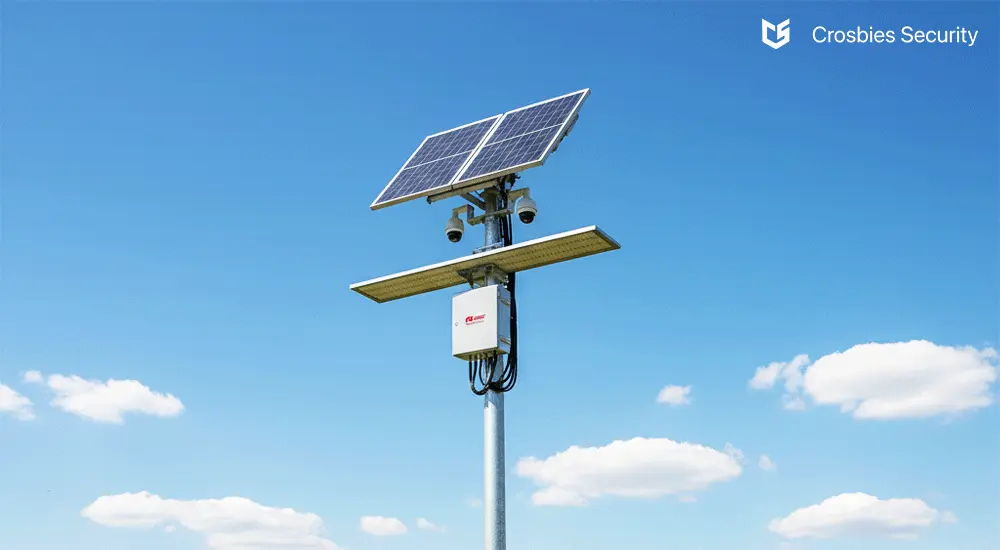
1080p vs 4K for Commercial Outdoor Solar Lights in NZ: Balancing Cost, Performance, and Standards
Businesses rely on outdoor solar lights in NZ for safety in places where power is hard to find. These systems keep operations running without needing the main power grid. New Zealand has wild weather and big rural spaces. Because of this, solar surveillance is becoming the best choice for non-stop monitoring.
Power cuts or broken cameras can leave your assets at risk. This is a major pain point for anyone managing remote properties. Solar lighting systems with built-in cameras solve this. They keep sites lit and watched, even without permanent cables.
Camera technology is moving fast. When paired with outdoor solar lights in NZ, modern cameras give you clear video and long battery life. But you still have one big choice to make: should you use 1080p or 4K resolution for your business?
Why Outdoor Solar Lights in NZ Matters for Commercial Security
Lighting dictates how well your security system works. Good light removes blind spots. It makes video evidence clearer and helps camera sensors do their job. Outdoor solar lights in NZ improve visibility and stop crime before it happens. Best of all, they do this without adding to your power bill.
For commercial and rural sites, these benefits are vital. They fix security holes caused by dark nights and poor visibility.
With the right outdoor lighting:
- Camera accuracy gets better. Bright light helps cameras spot movement and identify faces or cars.
- Power bills go down. Solar systems are energy-efficient. You get bright light with zero ongoing power costs.
- Safety improves. A well-lit area stops accidents and scares off trespassers.
When you mix outdoor lighting with cameras, you get automatic night monitoring. Add motion sensors, and you ensure your system records exactly when it needs to.
The Importance of Video Quality in Commercial Surveillance
Video resolution changes how well you can identify a threat. A 1080p camera records at 1920×1080 pixels. A 4K model captures 3840×2160 pixels. The main difference is detail. 4K has four times the pixel density. This lets you zoom in on distant objects with great clarity.
However, 4K needs more power, faster internet, and more storage. Many businesses find that 1080p is the sweet spot. especially for sites using outdoor solar lights in NZ. It gives you clear footage. You can identify faces and vehicles without needing expensive data systems.
When you look at video quality, don’t just chase the highest number. Pick the right tool for the job. For most sites, 1080p is sharp enough without draining your batteries or your budget.
Balancing Cost, Performance, and Standards: 1080p vs 4K Solar Security Cameras in NZ
Choosing between 1080p and 4K comes down to balance. You must weigh performance against cost and compliance. Each option has pros and cons. For businesses using outdoor solar lights in NZ, knowing the difference keeps your off-grid system reliable.
The 1080p option gives you good video while saving energy and data. It is perfect for big areas like farms or construction sites. The 4K option gives you sharper details for high-security zones. However, 4K uses up to 657% more bandwidth than 1080p. This impacts your storage limits, upload speeds, and total costs.
Performance and Clarity
The performance gap is all about pixels. 4K has more of them. This helps you identify small details like license plates from far away. If you need absolute proof for incident reports, 4K helps.
But remember, bigger files need stronger internet. 1080p is still very efficient for most NZ industries. It provides clear video without overloading your solar batteries or 4G connection. It performs well when monitoring open spaces and general daily activity.
Cost and Energy Efficiency
Running a solar camera isn’t just about the lens. You have to pay for the power and storage, too. 4K cameras are hungry. They need more processing power to run. This means you need bigger solar panels, larger batteries, and more maintenance.
In contrast, 1080p cameras sip power. They save battery life. This means you don’t need oversized, expensive equipment. You also save money on cloud storage fees. Over a few years, the savings are huge.
Compliance and Practical Standards
In New Zealand, you must follow the Privacy Act 2020. This law says you must handle data securely. It also says footage must be clear enough for its purpose. There is no rule saying you must have 4K. You just need video that works.
1080p easily meets this standard. It captures solid evidence while keeping data manageable. 4K is good for strict sites that need precise ID checks, but it is often overkill for standard monitoring.
Other Factors to Consider When Choosing 1080p and 4K Outdoor Solar Cameras
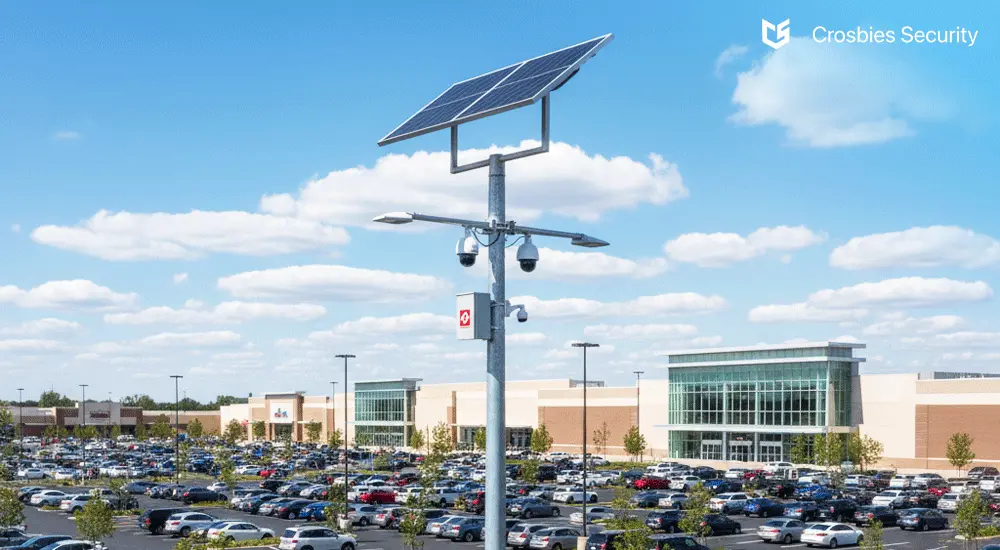
Resolution isn’t the only thing that matters. Other factors change how these systems work in the real world. Here is how they compare for maintenance and site conditions:
- Network reliability. 1080p cameras work well even with slow internet. This makes them great for rural spots. 4K cameras need fast speeds to stream video without lag. The Crosbies Security G3 solar tower uses 1080p to ensure steady performance without data crashes.
- Installation. 1080p systems fit easily into most setups. 4K might need you to upgrade your internet hardware first.
- Maintenance. Lower-resolution systems are easier to manage. Files are smaller and they use less power. High-res systems need frequent checks to ensure storage isn’t full and batteries are charged.
- Site coverage. You can run multiple 1080p cameras for the price (and power) of one 4K unit. This gives you better views of the whole site.
- Lighting integration. Cameras sharing power with outdoor solar lights in NZ need to be efficient. The G3 tower’s 1080p setup works perfectly with solar lights, giving you 24/7 security.
A setup that balances efficiency and clarity, like the G3 tower, guarantees stability and lower costs.
Calculating Storage Costs for Different Resolutions
More pixels mean more data. A 1080p camera might use 1.3 terabytes of data in a month. A 4K camera can chew through 5 terabytes in the same time. If your site runs on outdoor solar lights in NZ, this cost adds up fast.
The total price depends on how long you keep the footage. Recording only when motion is detected helps save space. Modern compression tech (like H.265) also helps. Cloud storage is easy to use but has monthly fees. Local storage costs more upfront but saves money long-term.
A smart move is to mix and match. Use 1080p for big areas. Save 4K for the high-risk spots. This keeps your storage costs under control.
Managing Power and Infrastructure for Solar Surveillance Systems
Solar systems live and die by their batteries. NZ weather changes fast. The amount of sun you get impacts how well your battery charges. Your camera resolution decides how fast that battery drains.
When looking at power for outdoor solar lights in NZ, focus on:
- Panel efficiency. Good panels create power even on cloudy days.
- Battery storage. Big batteries keep you running through long winter nights, but they cost more.
- System optimization. You want lights, cameras, and sensors to work together without wasting juice.
Legal and Regulatory Considerations in New Zealand
If you install cameras in NZ, you must respect the Privacy Act 2020. You need to put up signs telling people they are being filmed. You must store data safely and only use it for valid reasons. This applies to both wired and solar systems.
The law doesn’t demand specific resolutions. However, the footage must be fit for purpose. If you are watching a gate to identify thieves, the video needs to be sharp enough to see faces.
When to Choose 1080p over 4K for NZ Sites?
Most NZ sites are big, open outdoors. In these places, reliability wins over pixel count. Construction sites, farms, and storage yards need cameras that run 24/7 without failing.
The Crosbies G3 solar camera is built for this. It uses 1080p to stay efficient. It gives you long battery life and dependable video.
A 1080p system is perfect for off-grid spots. It ensures your outdoor solar lights in NZ and cameras keep running all night. It covers more ground with less maintenance.
However, choose 4K if you need to see fine details. This includes high-security gates or indoor areas where you need to read paperwork or badges.
For the best results, use both. Put 1080p cameras in the yard and 4K cameras at the main entrance. This gives you a balanced, secure, and efficient system.
The Future of Solar-Powered Surveillance in New Zealand
The demand for solar security is growing. Construction sites and businesses know they need off-grid options. Solar panels and batteries are getting better every year.
Future towers will be smarter. We will see better links between outdoor solar lights in NZ, video analytics, and remote apps. AI tools will spot threats automatically. Better power management will keep systems running longer in winter.
The future is scalable, green security. As tech improves, solar surveillance will save you even more money.
Building Smarter, Sustainable Security Systems
Good security is about more than just a camera lens. It takes planning. You need to balance energy, lighting, and rules. When you mix outdoor solar lights in NZ with the right camera, you get protection that lasts.
Crosbies Security helps NZ businesses find this balance. We provide reliable solar solutions. Our systems offer clear video, smart power use, and total monitoring.
Invest in quality solar surveillance today. Choose the technology that fits your site. You will secure your assets, cut costs, and stay legal. Reliable protection starts here. With the right outdoor solar lights in NZ, you can trust your security in any environment.
